
🍔🧠 How Uber Predicts Driver Earnings Using Deep Probabilistic Models
PLUS: How Stock Exchanges Work 🏛️, Tinder's Architecture 🔥, JWT From 0 To Hero 🎓

Today’s issue of Hungry Minds is brought to you by:

Happy Monday! ☀️
Welcome to the 180 new hungry minds who have joined us since last Monday!
If you aren’t subscribed yet, join smart, curious, and hungry folks by subscribing here.

📚 Software Engineering Articles
LinkedIn scales feed with FishDB, a new retrieval engine
Inside Tinder’s monolith decomposition serving 70M users
Martin Fowler discusses how AI transforms software engineering
Lyft rebuilds ML platform architecture from ground up
Understand stock exchanges in system design terms
🗞️ Tech and AI Trends
Google launches Gemini 3, heats up AI race
Bezos returns with new AI startup as co-CEO
Microsoft and Nvidia invest in Anthropic, valued at $350B
👨🏻💻 Coding Tip
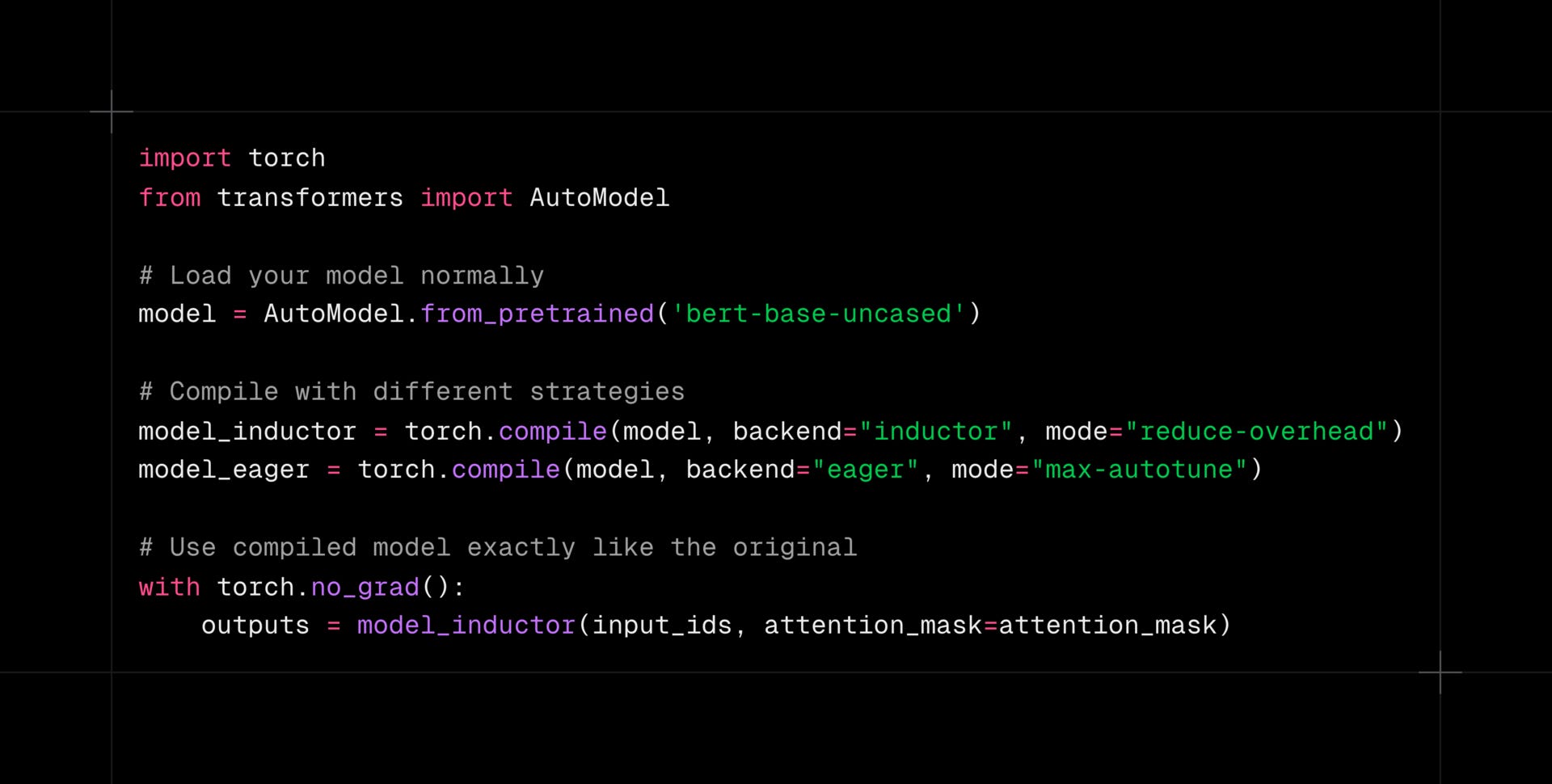
Optimize PyTorch models with torch.compile() for up to 50% speedup
Time-to-digest: 5 minutes
Your AI App Doesn’t Need 3 Different Databases

What’s inside Database 26AI from Oracle:
Unified stack: Stop stitching together Vector, Graph, and Relational databases. 26ai handles all three natively in one engine.
Zero latency: Run AI models directly inside the database. No network hops, no serialization, and no data exfiltration.
Developer-friendly: JSON Relational Duality gives you the flexibility of documents with the power of SQL.
Automated optimization: AI-driven tuning and indexing allow you to focus on building, not maintaining.
Multi-cloud ready: Deploy it anywhere; Oracle 26ai plays nice with your existing cloud infrastructure.

How Uber Predicts Driver Earnings with Deep Probabilistic Models 🎲
Uber moved beyond simple averages to help drivers decide where and when to drive. By transitioning from standard regression to deep probabilistic models, they can now forecast not just likely earnings, but the uncertainty and risk associated with every location.
The challenge: Accurately forecast driver earnings in a chaotic real-world environment where a simple “average” hides the massive volatility of demand, traffic, and trip duration.
Implementation highlights:
Gaussian Mixture Models (GMMs): Replaced single-outcome predictions with multi-modal distributions to capture complex earning patterns (like “high chance of medium pay” vs. “low chance of huge pay”).
Deep Neural Network backbone: Swapped XGBoost for a deep architecture that outputs the weight, mean, and standard deviation for every component of the mixture.
Truncation correction: Solved “underprediction bias” by mathematically adjusting the loss function to account for the fact that earnings can never be negative.
Rich feature embeddings: Processed over 60 signals—including real-time surge, historical earnings, and wait times—through deep embedding layers.
Spatial smoothing: Applied post-processing logic to eliminate “islands” (isolated high spikes) and “donuts” (weird gaps) to make the heatmap visually intuitive.
Results and learnings:
Risk-aware filtering: The system now hides areas with high predicted earnings if the variance is too high, protecting drivers from bad gambles.
Higher driver pay: Users following the new probabilistic guidance achieved higher average earnings per hour.
Increased engagement: The improved trust in the data led to a measurable increase in total completed trip hours across the platform.
Uber’s journey highlights a crucial lesson for ML engineers: sometimes predicting the uncertainty of an event is just as valuable as predicting the value itself.
If only we had a probabilistic heatmap for choosing the fastest checkout line at the grocery store!

Try Oracle Autonomous AI Database for Free
Deploy free instances of Oracle Autonomous AI Database for free and receive $300 in credit towards a wide range of cloud services.
FishDB: a generic retrieval engine for scaling LinkedIn’s feed
This blog post chronicles our multi-year journey to implement FishDB and how it’s helping us achieve 2x efficiency and reducing hardware usage for the feed by 50% – all while offering more flexible APIs and maintaining our demanding latency SLOs. We’ll also highlight FishDB’s architecture and the decisions we made throughout the migration process.
Latency vs. Throughput vs. Bandwidth
Written by Ashish Pratap Singh

How Stock Exchange Works
Written by Neo Kim

How AI is Transforming Software Development
Written by Gergely Orosz

How Tinder Decomposed Its iOS Monolith App Handling 70M Users
Written by Alex Xu

2-Tier to 3-Tier Architecture: Migration Journey With Modular Monolith and GraphQL
Written by Petar Ivanov

LyftLearn Evolution: Rethinking ML Platform Architecture
As our scale grew, we faced a classic engineering challenge: the very complexity that powered our platform was becoming a bottleneck to its future growth. We needed to answer a fundamental question: How could we evolve our platform to accelerate innovation for our users while simplifying its underlying architecture?
ARTICLE (gemini-brain-builder)
Practical Guide on how to build an Agent from scratch with Gemini 3
ESSENTIAL (open-source-blues)
The fate of “small” open source
ARTICLE (copilot-diet-plan)
How we’re making GitHub Copilot smarter with fewer tools
ARTICLE (readme-master-class)
How to write a great agents.md: Lessons from over 2,500 repositories
GITHUB REPO (sql-time-machine)
RegreSQL
GITHUB REPO (facebook-firefly)
Pyrefly
ARTICLE (database-guardian)
Only you can stop AI database drops
ESSENTIAL (token-party)
JWT Clearly Explained
ARTICLE (python-in-the-clouds)
A closer look at Python Workflows, now in beta
ARTICLE (manager-ai-superpower)
Managers Have the Right Skills for AI Coding, While ICs Have Issues
Want to reach 200,000+ engineers?
Let’s work together! Whether it’s your product, service, or event, we’d love to help you connect with this awesome community.

🧠 Google Announces Gemini 3 as OpenAI Battle Intensifies (5 min)
Brief: Google’s new Gemini 3 AI model is rolling out across search and enterprise products with improved context and nuance understanding to challenge OpenAI’s dominance.
🚀 Jeff Bezos Launches Project Prometheus with $6.2B (5 min)
Brief: Jeff Bezos returns to an operational role as co-CEO of Project Prometheus, a new manufacturing-focused AI startup launching with $6.2 billion in funding and top talent from OpenAI and DeepMind.
⚖️ Meta Wins Antitrust Ruling, Opening Door for M&A (6 min)
Brief: A federal judge ruled that Meta did not illegally stifle competition with its Instagram and WhatsApp acquisitions, signaling a potential resurgence of startup acquisitions across Silicon Valley.
🎈 Google Antigravity Experiment (1 min)
Brief: The new all-in agentic IDE from Google is out, try it out!
💰 Anthropic Hits $350B Valuation with Microsoft and Nvidia Backing (4 min)
Brief: Microsoft and Nvidia have invested a combined $15 billion into Anthropic, pushing its valuation to a staggering $350 billion while securing massive new compute capacity commitments.
📱 Android and iPhone Finally Get Cross-Platform File Sharing (2 min)
Brief: Google has announced that Android and iPhone users will finally be able to seamlessly share files between devices, launching first on the upcoming Pixel 10.

This week’s coding challenge:
This week’s tip:
Use PyTorch’s torch.compile() with different backends and modes to optimize model inference performance without changing your model code. The JIT compilation can provide 20-50% speedups for many transformer architectures.
Wen?
Production inference servers: Reduce latency for transformer models without architectural changes
Batch processing pipelines: Speed up large-scale text or image processing workflows
Real-time applications: Optimize models for interactive chatbots or recommendation systems
“The only thing standing between you and your goal is the story you keep telling yourself as to why you can’t achieve it.”
Jordan Belfort

That’s it for today! ☀️
Enjoyed this issue? Send it to your friends here to sign up, or share it on Twitter!
If you want to submit a section to the newsletter or tell us what you think about today’s issue, reply to this email or DM me on Twitter! 🐦
Thanks for spending part of your Monday morning with Hungry Minds.
See you in a week — Alex.
Icons by Icons8.
*I may earn a commission if you get a subscription through the links marked with “aff.” (at no extra cost to you).