
🍔🧠 How Levels.fyi Used Google Sheets to Scale to Millions
PLUS: RIP Midjourney 🔥, Free Git Roadmap 📚, Dependency Injection in React ⚡

Welcome to the 1762 new hungry minds who have joined us since last Monday!
If you aren’t subscribed yet, join smart, curious, and hungry folks by subscribing below.
We've passed the 30,000 Hungry Minds milestone this week! 🎉🎉🎉
Thank you all for reading and spending part of your Monday morning with me, it's only day 1! 🔥
🍔 THIS WEEK’S MENU 🥗
📚 Software Engineering Articles
Discover how Levels.fyi scaled millions of users using Google Sheets.
Learn how Facebook syncs time across millions of servers.
Explore AI-powered answers and summaries for file previews on the web.
Check out the comprehensive Git and GitHub roadmap for developers.
Understand message queues and when to best utilize them.
🗞️ Tech and AI Trends
YouTube is testing Google Gemini for brainstorming video ideas.
Forget Midjourney — Flux is now the king of AI image generation.
Analyze what to expect from Google's Pixel 9 event.
👨🏻💻 Coding Tip
Use the Decorator Pattern in Python to enhance dynamic object functionality.
Food for Thought 🧠
A mindset, an example, and an action item to start the week
"Simplicity is the soul of efficiency."
Austin Freeman
Mindset: Simple > complex.
Example: Apple's minimalist design philosophy exemplifies this quote.
Action: Identify one complex task and find a simpler approach to it.
The Rabbit Hole 🐰
Deep dives, trends, and resources curated to stay ahead
How Levels.fyi scaled to millions of users with Google Sheets as a backend
How Facebook Syncs Time Across Millions of Servers
Written by Alex Xu

Bringing AI-powered answers and summaries to file previews on the web
Dropbox can provide a summary of the video and a user can ask questions about its contents—all from the file preview. We recently expanded AI-powered summarization and Q&A to handle multiple files simultaneously, too: here’s how.
Git and GitHub Roadmap
The ultimate roadmap to learn git!
What are Message Queues and When to Use Them?
Written by Ashish Pratap Singh

How to say "No" and win back your time as a software engineer
Written by Jordan Cutler

Don’t Measure Code Stats
Written by Kevin Naughton Jr.

Engineering cultures: Meta vs Netflix vs Airbnb
Written by Zach Wilson

Ask First, Code Later: The single, most important question
Written by Fran Soto

💾 SIDE DISHES 💾
ARTICLE (id-entity crisis)
IDs, UUIDs and alternatives
ARTICLE (money matters, but not in a cringe way)
How Uber Tests Payments In Production
ARTICLE (scaling, but not wallet scaling)
The Sneaky Costs of Scaling Serverless
ARTICLE (delivery with a side of blue-green)
How DoorDash Deploys at Scale
ESSENTIAL (keep it simple, silly)
Make Things Simpler Than Possible
ARTICLE (url-some magic)
Examples Of Great URL Design
GITHUB REPO (comfy-ui? yes please!)
ComfyUI
ARTICLE (reacting to your state )
Build your own React state management library in under 40 lines of code
ARTICLE (read, write, and repeat)
Don't Get Caught by Surprise: Understanding the READ AFTER WRITE Problem
ARTICLE (a nail in the go ) Go is my hammer, and everything is a nail
ARTICLE (dependency daydreams)
Dependency injection in React - How to Manage Dependencies in Your React App for Cleaner and Easier to Maintain Code
ARTICLE (collision course ahead)
Sort, sweep, and prune: Collision detection algorithms
ARTICLE (tdd - testing daily despair?)
Did TDD actually improve your productivity?
ARTICLE (pointer party in real-time)
Real-time mouse pointers
The Weekly Digest 🗞️
Software, AI, and startup news worth your time
💡 YouTube Tests Google Gemini Integration to Enhance Creator Brainstorming (2 min)
Brief: YouTube's new Brainstorm with Gemini feature aims to assist creators with video ideas and titles through AI, while seeking feedback in a limited experiment that could differentiate it from competing platforms.
🎨 Forget Midjourney - Flux is the New King of AI Image Generation (3 min)
Brief: New AI image generator Flux, developed by Black Forest Labs, gains rapid popularity for its open-source access, outperforming Midjourney in specific rendering tasks, while raising the bar for generative AI technology.
🚀 X Releases Grok-2: Enhanced AI Model Outperforms Rivals (4 min)
Brief: The launch of Grok-2 and Grok-2 mini marks a major upgrade in AI capabilities, demonstrating superior performance in reasoning, coding, and factual accuracy compared to competitors like Claude 3.5 Sonnet and GPT-4-Turbo.
💻 Anthropic Unveils Prompt Caching to Enhance API Efficiency (3 min)
Brief: Anthropic's new prompt caching feature allows developers to cache context between API calls, significantly reducing costs by up to 90% and latency by up to 85% for applications like conversational agents and document processing.
📱 Apple Eyes Thinner iPhone 17 Model to Boost Sales (3 min)
Brief: Apple plans to release a thinner iPhone 17, positioned as an "Air" model to fill the gap between standard and Pro versions, aiming for greater market success by 2025.
📱 Google Unveils Exciting Lineup for Pixel 9 Launch Event (3 min)
Brief: Google confirms the launch of Pixel 9, Pixel 9 Pro Fold, and potential surprises like Buds Pro 2 and Pixel Watch 3, featuring upgraded specs and designs.
The Quick Byte 💾
One coding tip because you’re technical after all
This week’s coding challenge (by John Crickett):

This week’s tip:
The Decorator Pattern in Python is a powerful design pattern that allows you to add additional responsibilities to an object dynamically, without modifying its core functionality. It's particularly useful for adding cross-cutting concerns or extra features to classes without cluttering the code.
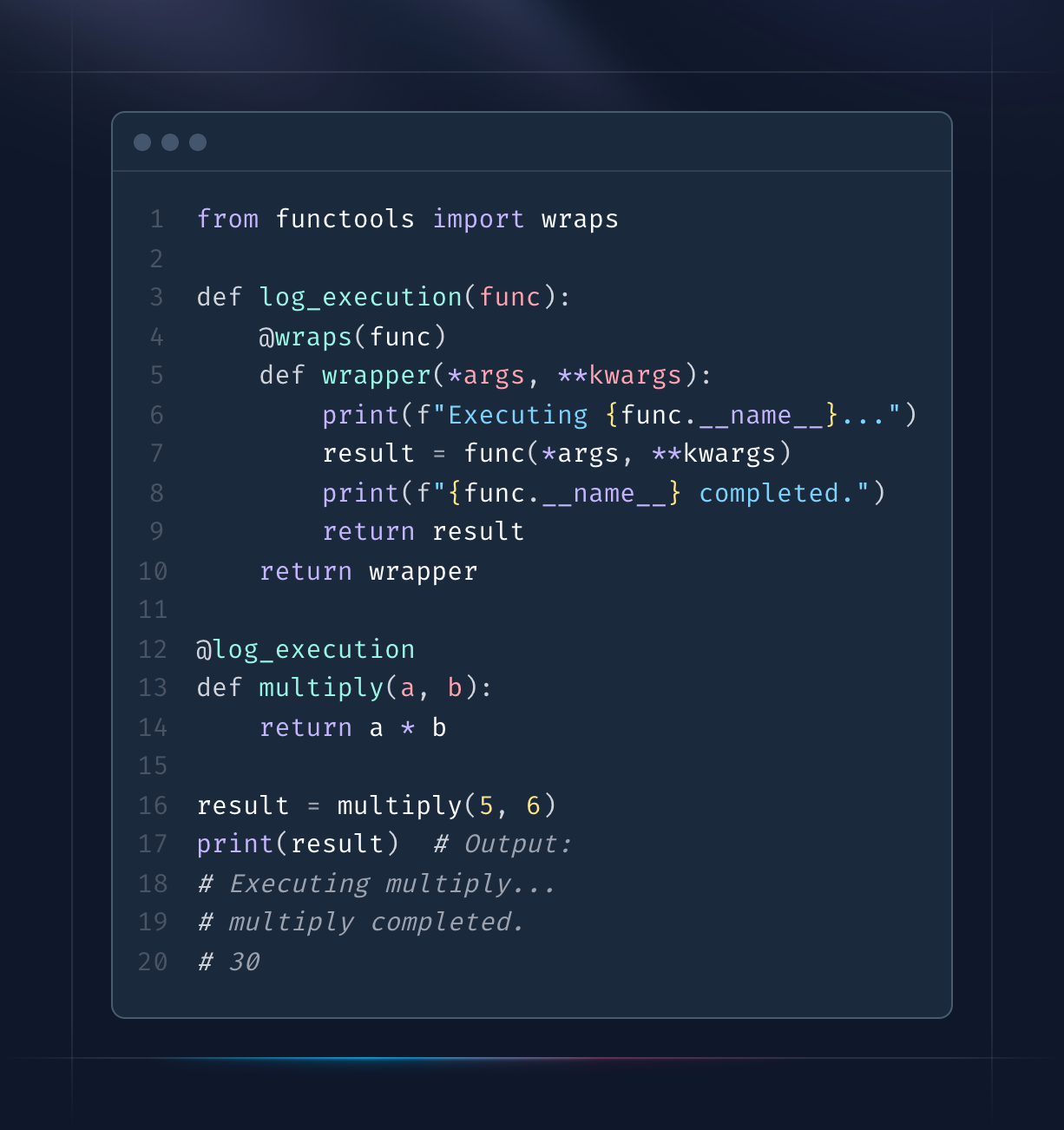
Wen?
Adding Logging or Monitoring: The Decorator pattern can be used to add logging, performance monitoring, or other cross-cutting concerns to your functions or classes without modifying their core implementation.
Extending Functionality: You can use Decorators to add new features or responsibilities to existing classes or functions, such as caching, authorization, or input validation.
Maintaining Open/Closed Principle: Decorators allow you to extend the behavior of a class or function without modifying its original code, which aligns with the Open/Closed Principle of software design.
Why?
Flexibility: Decorators provide a flexible way to add or remove additional responsibilities to an object, without affecting the object's core functionality. This makes the code more modular and easier to maintain.
Separation of Concerns: The Decorator pattern helps to separate the core functionality of a class or function from the additional responsibilities, making the code more organized and easier to understand.
Code Reuse: Decorators can be reused across multiple classes or functions, promoting code reuse and reducing duplication.
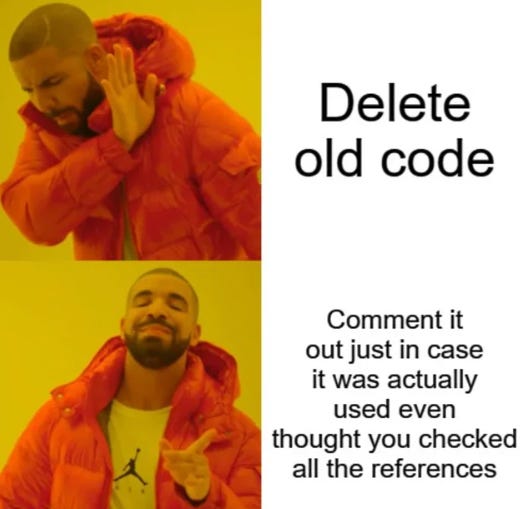
Burp-A-Laugh 🤣
The most important meal of your day
That’s it for today! ☀️
Enjoyed this issue? Send it to your friends here to sign up, or share it on Twitter!
If you want to submit a section to the newsletter or tell us what you think about today’s issue, reply to this email or DM me on Twitter! 🐦
Thanks for spending part of your Monday morning with Hungry Minds.
See you in a week — Alex.
Icons by Icons8.
*I may earn a commission if you get a subscription through the links marked with “aff.” (at no extra cost to you).