
🍔🧠 How AWS Lambda Serves Trillions on Requests a Month
PLUS: Instagram System Design 📸, How Cursor IDE Works 🖥️, Netflix's 140 Million Hours of Data Daily 📈

Happy Monday! ☀️
Welcome to the 526 new hungry minds who have joined us since last Monday!
If you aren’t subscribed yet, join smart, curious, and hungry folks by subscribing below.

📚 Software Engineering Articles
Learn the CAP theorem with simple, practical examples
Discover how Netflix stores 140M hours of viewing data daily
Inside look at Cursor AI IDE's powerful architecture
Why human code review will always beat AI
Store React state in the URL for better UX
🗞️ Tech and AI Trends
Chinese AI agent Manus sparks global debate
OpenAI's new API revolutionizes AI agent development
AirPods to feature real-time translation
👨🏻💻 Coding Tip
Use the
__slots__attribute in Python
Time-to-digest: 5 minutes

How AWS Lambda processes trillions of requests per month ⚡
AWS Lambda processes tens of trillions of monthly invocations across 1.5M+ active customers. The service has evolved sophisticated techniques to handle massive scale while maintaining performance and isolation between tenants.
The challenge:
Managing billions of asynchronous requests while preventing noisy neighbors from impacting other tenants and maintaining system stability during traffic spikes and component failures.
Implementation highlights:
Uses shuffle-sharding to distribute tenants across multiple queues, minimizing the blast radius of noisy neighbors
Implements proactive detection and automated isolation of high-traffic tenants to dedicated queues
Maintains resilience through processing backlogs during outages and controlled recovery with load shedding
Provides detailed observability through metrics like AsyncEventAge and AsyncEventDropped for monitoring
Results & Learnings:
Shuffle-sharding with 100 queues and 2 queues per tenant creates 4,950 unique combinations, giving only a 0.02% chance of tenant overlap
The system automatically detects and isolates traffic spikes to dedicated queues while maintaining overall stability
Load shedding during recovery ensures fair resource allocation and improves mean time to recovery
Pro tip: Monitor key metrics and configure failure handling through destinations/DLQs to avoid data loss 😉

CAP Theorem Explained In Simple Terms=
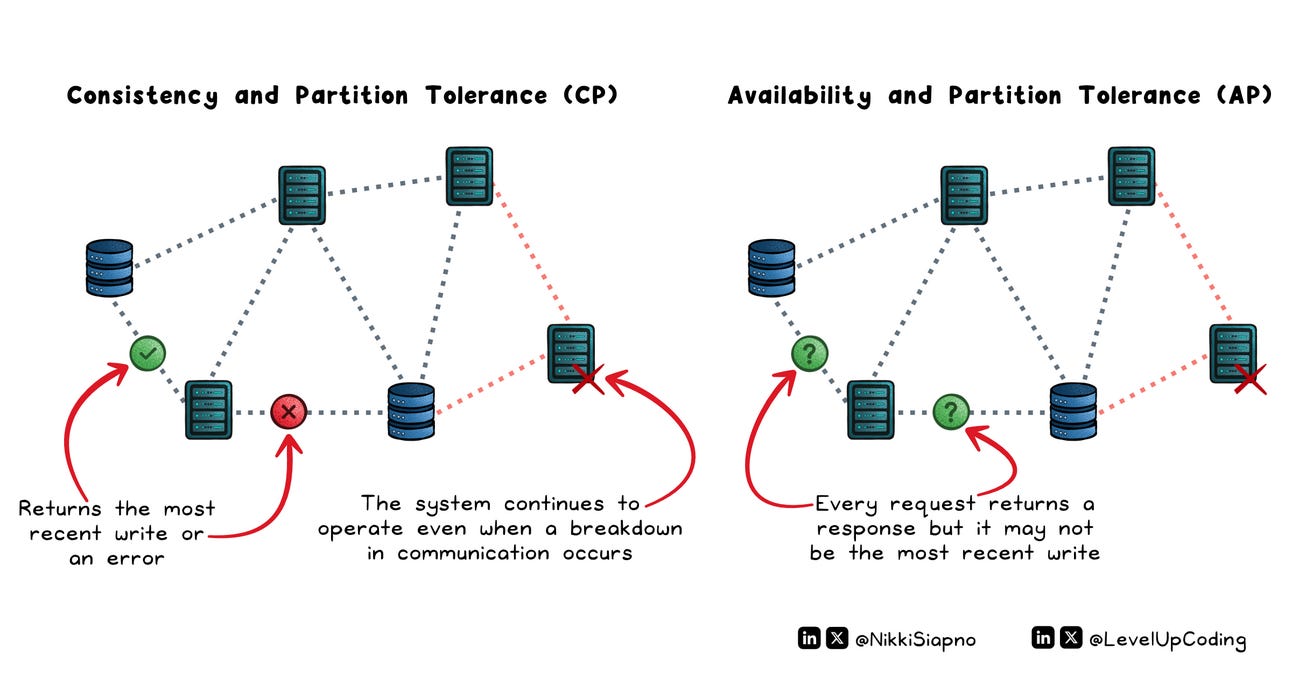
Design Instagram - System Design Interview
Written by Ashish Pratap Singh

How to Reduce Meetings 🪚
Written by Luca Rossi and Nicola Ballotta

Is vibe coding the future of Software Engineering?
Written by Gregor Ojstersek

What LeetCode Interviews Should Be
Written by Kevin Naughton Jr.

How Reducing Perfectionism Builds Better Software
Written by Fran Soto

Applied "Software Engineering at Google"
Written by Addy Osmani

How Cursor (AI IDE) Works
Turning LLMs into coding experts and how to take advantage of them.
How Netflix Stores 140 Million Hours of Viewing Data Per Day
Written by Alex Xu

ARTICLE (data lake showdown)
The Battle of Data Lakes: Iceberg vs Delta vs Hudi
ESSENTIAL (project wizardry)
How I’ve Run Major Projects
ESSENTIAL (praise the code)
How To Praise
ESSENTIAL (fingerprint fun)
What Is Device Fingerprinting And How Does It Work?
GITHUB REPO (deep research dive)
local-deep-researcher
GITHUB REPO (ai tutorial treasure)
ai-engineering-hub
ARTICLE (s3 simplicity saga)
In S3 simplicity is table stakes
ARTICLE (url state shenanigans)
The URL is a great place to store state in React
ARTICLE (git bundle bonanza)
Going down the rabbit hole of Git's new bundle-uri
ARTICLE (speedy ios tests)
How 40 Lines of Code Sped Up iOS End-to-End Tests by over 50%
ARTICLE (sync engine dreams)
Sync Engines are the Future
ARTICLE (stamina superpower)
Stamina is a Quiet Advantage
ARTICLE (ai code review conundrum)
Why AI will never replace human code review
ARTICLE (next.js vs tanstack tussle)
Next.js vs TanStack
Want to reach 150,000+ engineers?
Let’s work together! Whether it’s your product, service, or event, we’d love to help you connect with this awesome community.

🤖 Manus: China's New AI Agent Goes Viral, Sparking Global Debate (3 min)
Brief: Manus, a new autonomous AI agent from China, is impressing early testers with its ability to complete complex tasks rapidly, raising questions about AI leadership and the future of human-machine collaboration.
💻 Claude Code: A Fun Yet Pricey Experiment in Coding (3 min)
Brief: Claude Code offers a unique vibe coding experience that prioritizes fun and creativity over precision, but its high cost raises questions about its value for serious projects.
🤖 OpenAI Unveils New Developer API to Enhance AI Agent Capabilities (3 min)
Brief: OpenAI launches the Responses API to empower developers in creating autonomous AI agents, aiming to fulfill the vision of AI joining the workforce by 2025.
🤖 Google Unveils Gemini Robotics for General Purpose Robots (3 min)
Brief: Google introduces Gemini Robotics, aiming to create general purpose robots that can adapt, interact, and perform complex tasks using advanced AI models.
🎧 Apple Introduces Live Translation Feature for AirPods in iOS 19 (2 min)
Brief: Apple is set to launch live translation for AirPods with iOS 19, enabling real-time conversation translations, a feature already available in Google's Pixel Buds since 2017.

This week’s coding challenge:
This week’s tip:
In Python, the __slots__ attribute can be used to explicitly declare data members in a class, which can significantly reduce memory usage and improve attribute access speed. By using __slots__, you prevent the creation of a __dict__ for each instance, which is especially beneficial when dealing with a large number of instances.
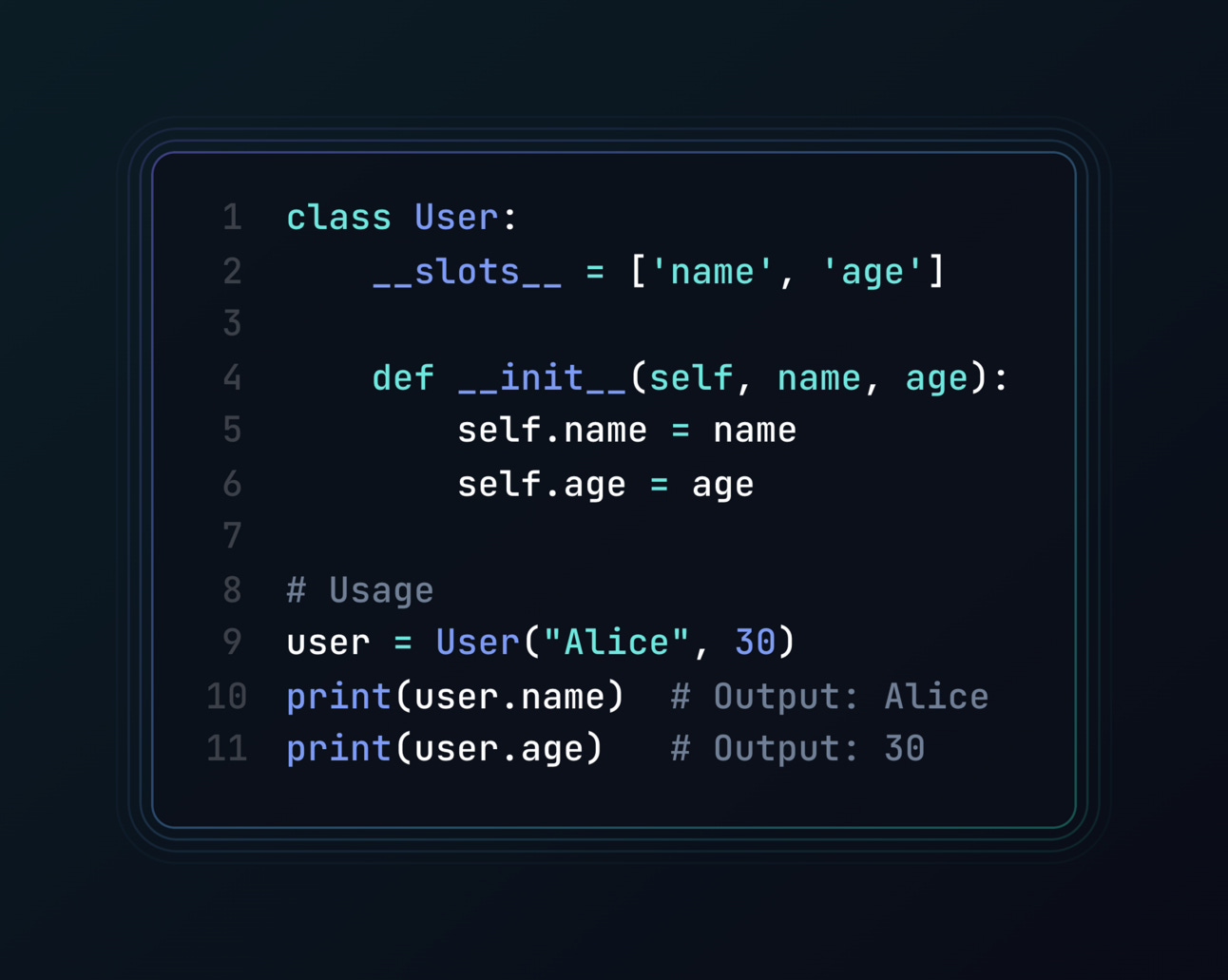
Wen?
Memory Optimization: Ideal for classes that will have a large number of instances, as it reduces the memory footprint by preventing the creation of a
__dict__for each instance.Performance Improvement: Useful in scenarios where attribute access speed is critical, as
__slots__provides faster attribute access compared to the default__dict__-based attribute lookup.Immutable Data Structures: Beneficial when you want to enforce a fixed set of attributes, preventing the dynamic addition of new attributes at runtime, which can help in maintaining a more predictable and controlled class structure.
“When one door of happiness closes, another opens, but often we look so long at the closed door that we do not see the one that has been opened for us."
Helen Keller


That’s it for today! ☀️
Enjoyed this issue? Send it to your friends here to sign up, or share it on Twitter!
If you want to submit a section to the newsletter or tell us what you think about today’s issue, reply to this email or DM me on Twitter! 🐦
Thanks for spending part of your Monday morning with Hungry Minds.
See you in a week — Alex.
Icons by Icons8.
*I may earn a commission if you get a subscription through the links marked with “aff.” (at no extra cost to you).
Thanks Alexandre! Hi from the author 👋